
16 September 2026
A new outdoor learning space for Tennant Creek
Working with Tennant Creek Primary School, AWF Network Partner NBRS is developing an outdoor learning space that brings education, healthy food and connection to Country together.
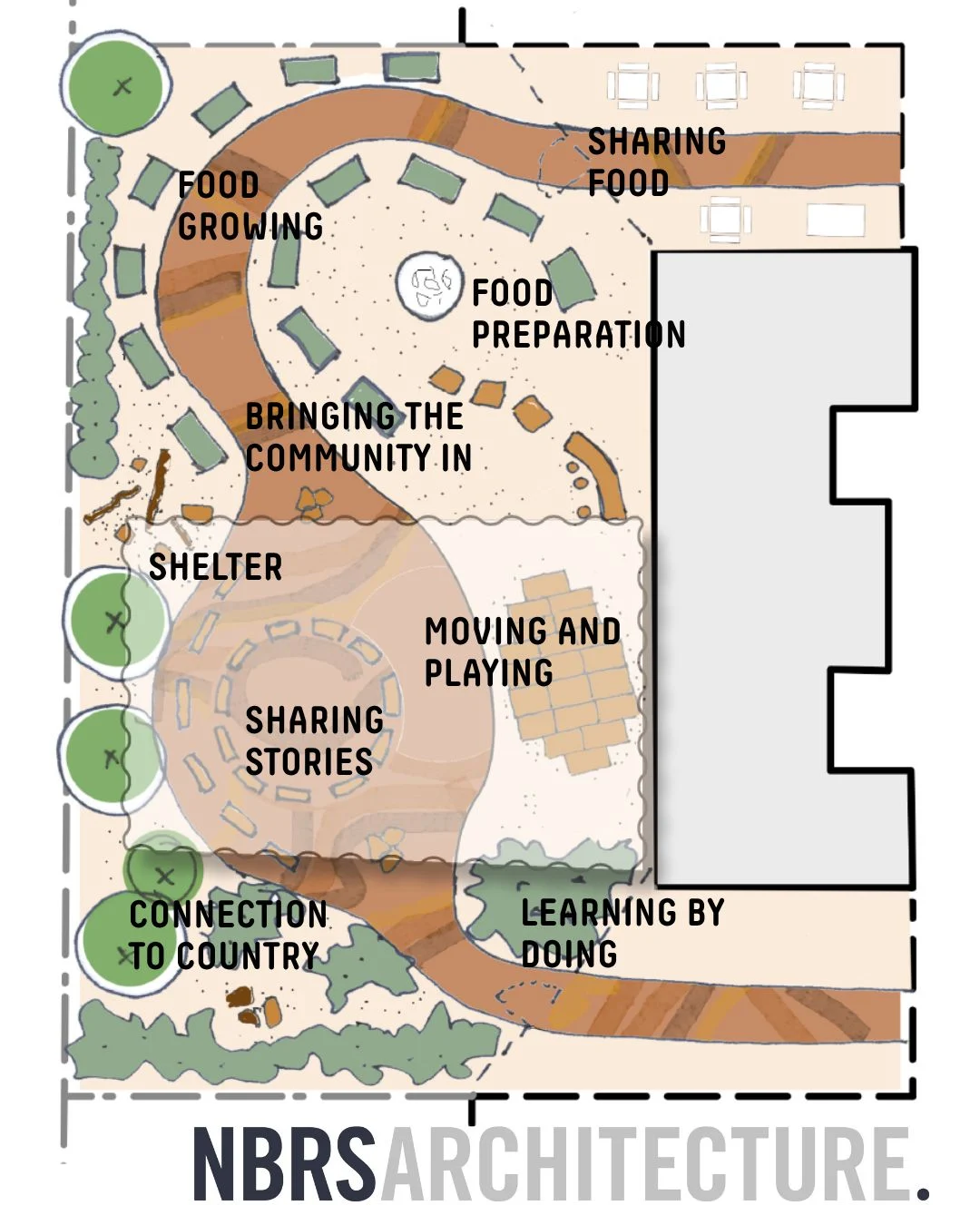
At Tennant Creek Primary School, staff and community members have identified that many students learn best through movement, doing and connection to Country. Their response is to create a place that makes room for those ways of learning, extending the possibilities of the school day beyond the classroom.
The school approached Architects Without Frontiers and AWF Network Partner NBRS to develop a sheltered outdoor learning space. The proposal combines an open-air classroom with a welcoming place for the community and an area for growing, preparing and sharing healthy food.
Learning through everyday activity
The brief brings several important parts of school life together. Growing food, preparing a meal, moving, playing and sharing stories can all become opportunities to learn and participate. Rather than treating these as separate activities, the concept considers how they can be supported within a connected outdoor environment.
NBRS’s concept plan identifies spaces for food growing and preparation, shared meals, shelter, gathering, movement and play. Connection to Country and learning by doing are central ideas within the plan, reflecting the priorities described by the school community.
NBRS is developing an all-weather space that draws on the colours, materials and stories of the area. The aim is to create an environment that responds to the place and the people who will use it.
Supporting participation and belonging
The project sits within a challenging local context, where housing insecurity and other pressures can make regular school attendance difficult. The proposed space is intended to support the school’s work by offering more ways for students to engage with learning and for the wider community to feel welcome.
Improved attendance, participation and engagement are the intended outcomes of the project. As the design develops, the focus remains on the school community’s understanding of what helps its children learn.
For AWF, the project demonstrates how connecting community knowledge with professional design expertise can help shape places for education that are practical, welcoming and grounded in local life.